When you need a replacement part for your vehicle, you may have several options to consider. Used and rebuilt auto parts can both provide alternatives to buying a brand-new component, but they are not the same.
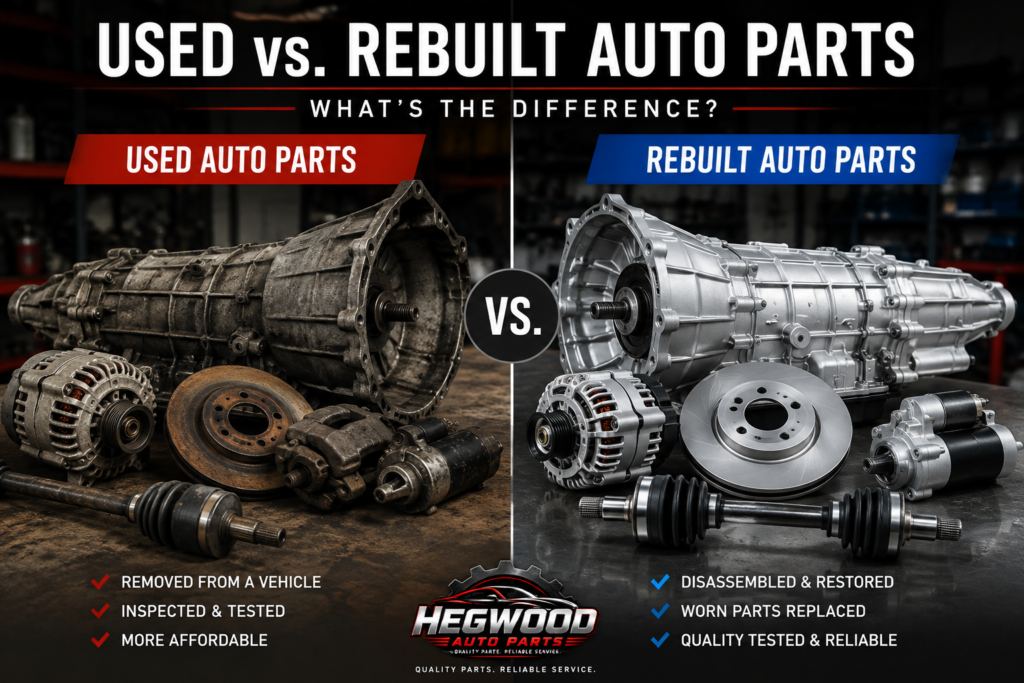
A used part generally comes from another vehicle and may be inspected before being sold, while a rebuilt part has been disassembled, inspected, and had certain components repaired or replaced as needed.
Understanding the difference between used and rebuilt auto parts can help you compare cost, condition, availability, warranty coverage, and suitability for your vehicle.
What Are Rebuilt Auto Parts?
Rebuilt auto parts are components that have been disassembled and inspected, with worn or damaged components repaired or replaced as appropriate. The goal of rebuilding is to restore the part to a usable operating condition.
Rebuilt parts can offer a middle ground between a used component and a brand-new replacement. However, the exact rebuilding process varies depending on the type of part and the supplier, so it is important to ask what work was performed and what warranty is included.
Key Differences Between Used and Rebuilt Auto Parts
The main difference is the condition and level of work performed on the component. A used auto part is generally sold in the condition it was removed from another vehicle, subject to any inspection or testing performed by the supplier. A rebuilt part has undergone a rebuilding process intended to restore its functionality.
Used parts may be a good choice when you need an affordable replacement and a suitable component is available. Rebuilt parts may be worth considering when you want a component that has received additional inspection, repair, or replacement of worn components.
What Are Used Auto Parts?
Used auto parts are components that have previously been installed in another vehicle and are removed for resale or reuse. Depending on the part, a used component may be inspected and tested before it is offered to another customer.
Used parts can be an affordable option for many repairs, particularly when a replacement component is no longer available new or when keeping repair costs down is important. The condition and remaining service life can vary depending on the part and its previous use.
What Are Rebuilt Auto Parts?
Rebuilt auto parts are components that have been disassembled and inspected, with worn or damaged components repaired or replaced as appropriate. The goal of rebuilding is to restore the part to a usable operating condition.
Rebuilt parts can offer a middle ground between a used component and a brand-new replacement. However, the exact rebuilding process varies depending on the type of part and the supplier, so it is important to ask what work was performed and what warranty is included.
Key Differences Between Used and Rebuilt Auto Parts
The main difference is the condition and level of work performed on the component. A used auto part is generally sold in the condition it was removed from another vehicle, subject to any inspection or testing performed by the supplier. A rebuilt part has undergone a rebuilding process intended to restore its functionality.
Used parts may be a good choice when you need an affordable replacement and a suitable component is available. Rebuilt parts may be worth considering when you want a component that has received additional inspection, repair, or replacement of worn components.
Which Is More Affordable: Used or Rebuilt Auto Parts?
In many cases, used auto parts cost less than rebuilt alternatives, although prices vary significantly by component, vehicle, condition, availability, and supplier. Rebuilt parts can cost more because additional labor and replacement components may have been involved in restoring them.
When comparing prices, consider more than the initial purchase price. Warranty coverage, return terms, expected service life, availability, and installation costs can all affect the overall value of a replacement part.
Compare Warranty and Return Policies
Warranty coverage can vary between used and rebuilt auto parts and between different suppliers. Before purchasing, ask what the warranty covers, how long it lasts, and whether there are conditions that apply.
You should also review the return policy before ordering. Make sure you understand the return period and any requirements regarding installation, damage, shipping, or restocking fees.
When Should You Choose a Used Auto Part?
A used auto part may be a practical choice when keeping the repair budget under control is important and a suitable replacement is available. Used components can also be useful for older vehicles where new replacement parts may be difficult to find.
Before buying, confirm the part’s compatibility and ask about its condition. For important mechanical, electrical, or safety-related components, make sure you understand what inspection or testing has been performed.
When Should You Choose a Rebuilt Auto Part?
A rebuilt auto part may be worth considering when you want a component that has undergone additional inspection and repair work. Rebuilding can replace certain worn components while retaining other usable parts of the original assembly.
Ask the supplier what was inspected, repaired, or replaced during the rebuilding process. This information can help you compare a rebuilt component with a used or new alternative
Used vs. Rebuilt Auto Parts: Quick Comparison
Both used and rebuilt auto parts can be useful replacement options, but the right choice depends on your vehicle, budget, the specific component, and your preferences regarding condition and warranty coverage.
| Feature | Used Auto Parts | Rebuilt Auto Parts |
|---|---|---|
| Previous use | Previously installed | Previously installed and rebuilt |
| Inspection | May be inspected or tested | Inspected as part of rebuilding |
| Repairs | Usually limited to preparation/testing | Worn or damaged components may be repaired or replaced |
| Cost | Often lower | Often higher than used |
| Warranty | Varies by supplier | Varies by supplier |
What to Ask Before Buying Used or Rebuilt Auto Parts
Before purchasing, ask the supplier whether the part is compatible with your vehicle, what condition it is in, whether it has been tested or inspected, and what work has been performed if it is rebuilt.
You should also ask about the warranty, return policy, availability, and expected delivery timeframe. Having your vehicle’s year, make, model, engine information, VIN, and original part number available can help the supplier identify the correct component.
Frequently Asked Questions
Are rebuilt auto parts better than used auto parts?
Are rebuilt auto parts better than used auto parts?
Not necessarily. A rebuilt part has undergone additional work, but the best option depends on the specific component, its condition, price, warranty, and suitability for your vehicle.
Are rebuilt auto parts more expensive than used parts?
They can be. Rebuilt parts may cost more because additional inspection, labor, and replacement components may be involved. Prices vary by part and supplier.
Do used auto parts come with a warranty?
Some suppliers offer warranties on used parts, but coverage varies. Always confirm the warranty terms before purchasing.
How do I know which part is right for my vehicle?
Provide accurate vehicle information such as the year, make, model, engine, VIN, and part number when available. A reputable supplier can use this information to help confirm compatibility.
Should I choose a used or rebuilt part for my repair?
Consider the part’s condition, price, availability, warranty, and the type of repair. For some applications, a used part may provide excellent value, while a rebuilt component may be preferable when additional inspection and replacement of worn components are important.
11. Final Thoughts
Add an H2:
Final Thoughts
Then paste:
Used and rebuilt auto parts can both provide practical alternatives to brand-new replacement components. The important thing is to understand the differences and choose the option that fits your vehicle, repair requirements, and budget.
Before purchasing, confirm compatibility, ask about the part’s condition and inspection, compare pricing, and review the warranty and return policy. Taking these steps can help you make a more informed decision.
If you’re looking for used or rebuilt auto parts, Hegwood Auto Parts can help you explore available replacement options. Have your vehicle information and part details ready so the correct component can be identified more easily.
. Key Differences Between Used and Rebuilt Auto Parts
Add an H2:
Used vs. Rebuilt Auto Parts: Key Differences
Then paste:
The main difference is the condition and preparation of the component. A used auto part is typically removed from another vehicle and inspected for resale, while a rebuilt part has undergone a rebuilding process in which certain components may be repaired or replaced.
Used parts may generally cost less and can be a good option when a suitable component is available. Rebuilt parts may cost more than a standard used component but can provide additional value when important internal components have been inspected or replaced.
The right choice depends on the type of part, your vehicle, your budget, availability, and the warranty offered by the supplier.
4. Cost Comparison
How to Choose Between Used and Rebuilt Auto Parts
Add an H2:
How to Choose Between Used and Rebuilt Auto Parts
Then paste:
The best option depends on your vehicle, the type of replacement part you need, your budget, and the condition of the available components. For some repairs, a quality used part may provide excellent value. For others, a rebuilt component may be worth considering because of the additional inspection and repair work involved.
Before making a decision, compare the part’s condition, price, availability, warranty, return policy, and compatibility with your vehicle. Taking these factors into account can help you choose the replacement that best fits your needs.
9. Verify Compatibility
Add an H2:
Verify Compatibility Before You Buy
Then:
Whether you choose a used or rebuilt auto part, compatibility should always be confirmed before purchasing. Provide the vehicle’s year, make, model, engine information, and VIN when available.
Part numbers can also be helpful when identifying the correct component. If you’re unsure whether a particular part will fit, ask the supplier to confirm compatibility before completing your purchase.
10. Where to Buy Used and Rebuilt Auto Parts
Add an H2:
Where to Buy Used and Rebuilt Auto Parts
Then:
Choosing a reliable supplier can make the process of finding the right replacement part much easier. Look for a business that provides clear information about its parts, can help with compatibility questions, and explains its warranty and return policies.
Hegwood Auto Parts offers used and rebuilt auto parts for customers looking for replacement components. When contacting a supplier, provide as much vehicle and part information as possible so they can help you identify the appropriate replacement.
11. Frequently Asked Questions
Add an H2:
Frequently Asked Questions
Then create each question as an H3.
Are rebuilt auto parts better than used parts?
Not necessarily. A rebuilt part has undergone additional inspection and repair work, while a used part may be sold after inspection without being rebuilt. The best choice depends on the specific component, condition, price, warranty, and your vehicle’s needs.
Are rebuilt auto parts reliable?
A properly rebuilt component can be a useful replacement option, but the quality depends on the rebuilding process and the supplier. Ask what work was performed and what warranty is included.
Are used auto parts cheaper than rebuilt parts?
Used parts are often less expensive, but prices vary by component, condition, availability, and supplier. Compare the total value rather than looking only at the initial price.
Should I check the warranty before buying?
Yes. Always understand the warranty period, coverage, and any conditions before purchasing either a used or rebuilt auto part.
How do I know which option is right for my vehicle?
Consider the type of part, your budget, availability, condition, compatibility, warranty, and expected use. If you’re unsure, speak with a knowledgeable auto parts supplier before purchasing.
12. Final Thoughts
Add an H2:
Final Thoughts
Then paste:
If you’re looking for used or rebuilt auto parts, contact Hegwood Auto Parts with your vehicle and part information to explore available replacement options.
Used and rebuilt auto parts can both be useful alternatives when you need a replacement component. Used parts may provide a lower-cost solution, while rebuilt parts can offer additional inspection and repair work depending on how they were remanufactured.
Before buying, compare the condition, price, compatibility, warranty, return policy, and supplier information. Taking the time to understand these differences can help you make a more informed decision and find the right part for your vehicle.
Are Rebuilt Auto Parts More Expensive Than Used Parts?
Then:
In many cases, a rebuilt auto part can cost more than a standard used part because additional work may have been performed on the component. However, price varies significantly depending on the type of part, its condition, availability, and the supplier.
When comparing prices, look beyond the initial purchase price. Consider the warranty, condition, expected service life, return policy, and any additional repair or installation costs. A lower-priced part is not necessarily the best overall value.
5. When Used Auto Parts May Be a Good Choice
Add an H2:
When Should You Choose Used Auto Parts?
Then:
Used auto parts may be a practical choice when you need an affordable replacement and a suitable component is available. They can also be useful for older vehicles where finding certain new replacement parts may be difficult.
Before purchasing, confirm the vehicle information and part number where available. Ask about the condition of the component and understand the supplier’s warranty and return policy.
6. When Rebuilt Auto Parts May Be a Good Choice
Add an H2:
When Should You Choose Rebuilt Auto Parts?
Then:
Rebuilt auto parts may be worth considering when you want a component that has undergone additional inspection and repair work. They can provide an alternative when a standard used component does not offer the level of condition or assurance you are looking for.
Ask the supplier what was inspected, repaired, or replaced during the rebuilding process. Also confirm what warranty coverage is provided with the part.
7. Check the Warranty
Add an H2:
Always Check the Warranty
Then:
Before purchasing, ask how long the warranty lasts, what failures are covered, and whether there are any conditions that apply. Keep your receipt and other purchase information in case you need to make a warranty claim.
Warranty coverage is an important consideration when comparing used and rebuilt auto parts. Warranty terms can vary depending on the supplier and the type of component.