Used Auto Parts vs. Rebuilt Auto Parts: Which Should You Choose?
When your vehicle needs a replacement component, you may have the option of choosing between used and rebuilt auto parts. Both options can provide alternatives to purchasing brand-new components, but they are not exactly the same.
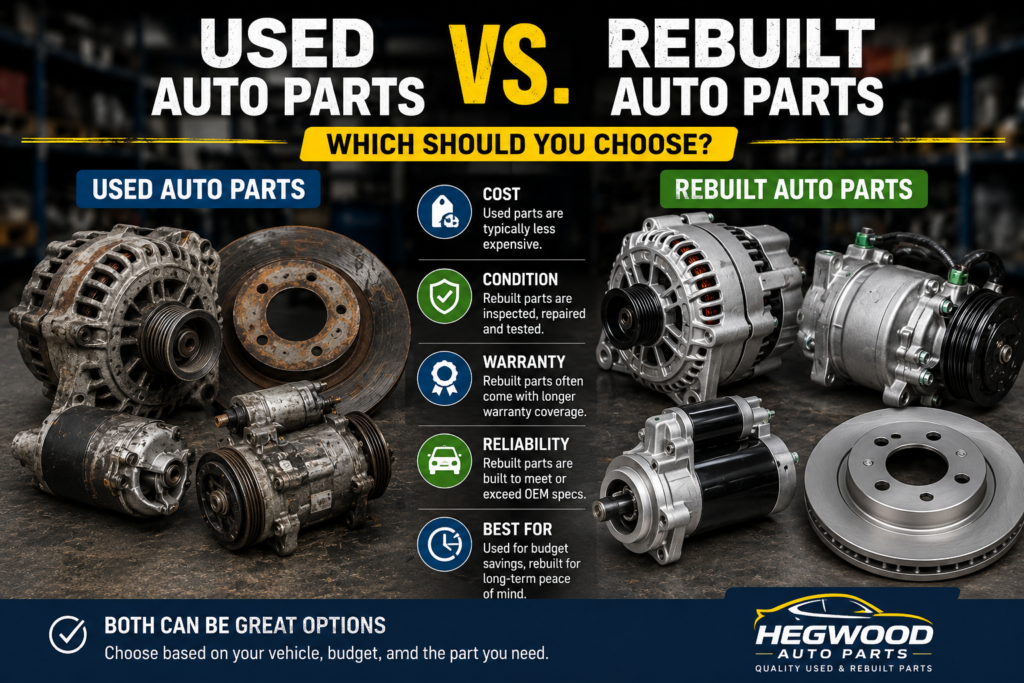
Used parts are typically removed from another vehicle and inspected for resale, while rebuilt parts have been disassembled, inspected, and repaired or replaced as needed before being returned to service.
Understanding the differences between used vs rebuilt auto parts can help you compare cost, condition, warranty coverage, and suitability for your vehicle.
In this guide, we’ll explain the key differences between used and rebuilt auto parts and help you determine which option may be right for your repair.
What Is the Difference Between Used and Rebuilt Auto Parts?
Used auto parts are components that have been removed from another vehicle and made available for reuse. Depending on the type of part and its condition, it may be inspected or tested before being sold.
Rebuilt auto parts go through a more extensive process. The component is typically disassembled, inspected, cleaned, and repaired or fitted with replacement components as needed before being put back into service.
The main difference is the level of inspection and repair performed on the component. When comparing used vs rebuilt auto parts, consider the part’s condition, price, warranty, and intended use before making a decision.
Cost Comparison: Used vs. Rebuilt Auto Parts
One of the biggest differences between used and rebuilt auto parts is the potential cost. Used parts are often less expensive because they are removed from existing vehicles and sold for reuse after appropriate inspection.
Rebuilt parts can cost more because they involve additional inspection, cleaning, repair, and replacement of worn components. However, the higher price may provide additional value depending on the type of part and the work performed during the rebuilding process.
When comparing prices, don’t look only at the initial purchase cost. Consider the condition of the part, warranty coverage, expected service life, installation costs, and return policy.
Condition and Inspection
The condition of a used part can vary depending on its previous use, mileage, maintenance history, and storage. Ask the supplier about the part’s condition and whether it has been inspected or tested.
Rebuilt parts generally go through a more detailed process before being sold. Worn or damaged components may be replaced during rebuilding, depending on the part and the rebuilding process.
Understanding how a component was inspected or rebuilt can help you make a more informed decision when comparing used vs rebuilt auto parts.
Warranty Considerations
Warranty coverage is an important factor when comparing used vs rebuilt auto parts. Warranty terms can vary depending on the supplier, the type of component, and whether the part is used or rebuilt.
Before purchasing, ask how long the warranty lasts, what types of problems are covered, and whether there are any conditions that apply. A clear warranty can provide additional confidence when selecting a replacement part.
When Should You Choose Used Auto Parts?
Used auto parts may be a good choice when you are looking for an affordable replacement and a suitable component is available. They can be particularly useful for older vehicles, body panels, interior components, wheels, lights, and many other parts.
Before buying, confirm the part number and vehicle compatibility. You should also ask about the part’s condition, mileage when available, inspection or testing, warranty, and return policy.
When Should You Choose Rebuilt Auto Parts?
Rebuilt auto parts may be worth considering when you want a component that has undergone additional inspection and repair. Rebuilding can involve replacing worn or damaged components, depending on the type of part and the rebuilding process.
Ask the supplier what work was performed during rebuilding and what warranty is included. This information can help you determine whether a rebuilt component offers the right value for your particular repair.
How to Choose Between Used and Rebuilt Auto Parts
The right choice depends on the specific part, your vehicle, budget, and what is available. A quality used part may provide excellent value for many repairs, while a rebuilt component may be a better option when additional inspection and repair work is important.
Before making a decision, compare the condition, price, compatibility, warranty, return policy, and supplier information. Taking these factors into account can help you choose a replacement that fits both your vehicle and your budget.
Check Compatibility Before Buying
Whether you choose a used or rebuilt component, always confirm that the part is compatible with your vehicle. Have the year, make, model, engine, VIN, and original part number available whenever possible.
A part that looks similar may not necessarily fit your vehicle. Confirming compatibility with the supplier before purchasing can help prevent delays, additional costs, and the inconvenience of returning an incorrect part.
Why Choose Hegwood Auto Parts?
Hegwood Auto Parts provides used and rebuilt auto parts for customers looking for practical replacement options. Having accurate vehicle and part information available can help make it easier to identify the right component.
When contacting a parts supplier, provide your vehicle’s year, make, model, engine information, VIN, and part number when available. This information can help the supplier determine which used or rebuilt options may be suitable for your repair.
Frequently Asked Questions About Used vs. Rebuilt Auto Parts
Are rebuilt auto parts better than used auto parts?
Not necessarily. Rebuilt auto parts have undergone additional inspection and repair, while used parts may be sold after being inspected without being rebuilt. The best option depends on the specific component, its condition, price, warranty, and your vehicle’s needs.
Are used auto parts cheaper than rebuilt parts?
Used auto parts are often less expensive, although prices vary depending on the part, condition, availability, and supplier. Rebuilt parts may cost more because additional work has been performed on the component.
Are rebuilt auto parts reliable?
A properly rebuilt component can be a useful replacement option, but the quality depends on the rebuilding process and the supplier. Ask what work was performed and what warranty is included before purchasing.
How do I know which option is right for my vehicle?
Compare the condition, price, compatibility, warranty, return policy, and availability of the used and rebuilt options. Your budget and the type of repair should also be considered.
Should I check the warranty before buying?
Yes. Always review the warranty terms before purchasing. Understand how long the warranty lasts, what is covered, and whether any conditions apply.
Final Thoughts
When comparing used vs rebuilt auto parts, there is no single option that is best for every repair. Used parts can provide an affordable solution for many vehicles, while rebuilt components may offer additional inspection and repair work.
Take the time to compare the condition, price, compatibility, warranty, and return policy before making your decision. Choosing the right replacement part can help you control repair costs while getting your vehicle back on the road.
If you’re looking for used or rebuilt auto parts, Hegwood Auto Parts can help you explore available replacement options for your vehicle.