Buying used auto parts can be a practical way to reduce vehicle repair costs, but it is important to understand the condition of a part before purchasing it.
A used component may have different levels of wear depending on its age, mileage, previous use, maintenance history, and storage conditions. Knowing what to look for can help you avoid purchasing a part that is unsuitable for your vehicle.
In this guide, we’ll explain the most important things to check when evaluating the condition of a used auto part.
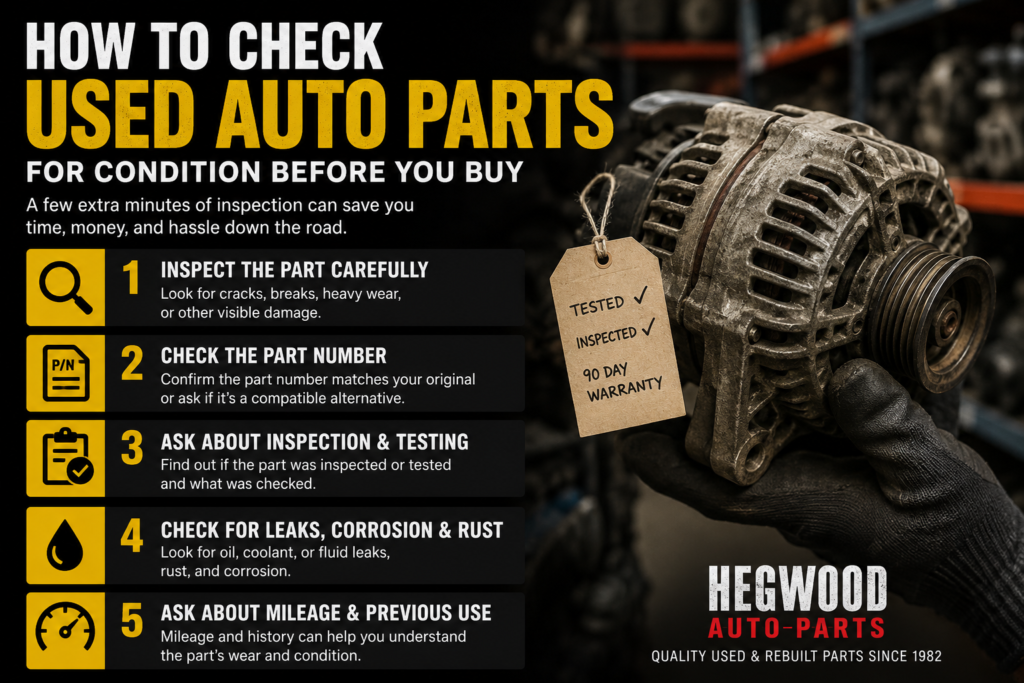
1. Look for Visible Signs of Damage
When buying used auto parts, start by carefully inspecting the part for visible signs of damage. Look for cracks, bends, broken mounting points, excessive rust, corrosion, leaks, or other issues that could affect the part’s performance.
For body panels and exterior components, check for dents, scratches, paint damage, and previous repairs. For mechanical components, look for signs of leaks, excessive wear, or physical damage.
If the condition is unclear, ask the supplier for additional photos or information before purchasing.
2. Check for Excessive Wear
The amount of wear on a used component can provide important information about its condition. Parts that have experienced heavy use may show more wear than components from a vehicle with lower mileage or less demanding use.
Ask the supplier about the part’s mileage when that information is available. For mechanical components, check for signs of excessive wear on moving parts, connections, seals, and other areas that may affect performance.
Understanding the expected level of wear for the specific component can help you decide whether the part offers good value.
3. Check the Part Number and Identification
Before purchasing used auto parts, check the part number whenever possible. The part number can help confirm that the component is designed for your specific vehicle or application.
Compare the number on the replacement part with the number from your original component. If the numbers are different, ask the supplier whether the replacement is a confirmed compatible alternative.
Checking identification details before purchasing can help prevent fitment problems and unnecessary returns.
4. Ask About Inspection and Testing
When evaluating used auto parts, ask whether the component has been inspected or tested before being sold. The type of inspection will depend on the part and its intended use.
Mechanical and electrical components may require different types of testing, while body panels and interior components can be evaluated primarily for physical condition. Understanding what has been checked can give you a clearer idea of what to expect from the part.
If testing has been performed, ask the supplier what was tested and whether any issues were found.
5. Check for Leaks, Corrosion, and Rust
Some signs of damage may not be obvious at first glance. Carefully check used mechanical and electrical components for oil, coolant, fluid residue, excessive corrosion, or rust.
A small amount of surface corrosion may not necessarily mean a part is unusable, but significant rust or corrosion can affect the condition and performance of certain components.
Ask the supplier about any visible leaks, corrosion, or other known issues before purchasing the part. This can help you better understand its condition and avoid unexpected problems.
6. Ask About the Part’s Mileage and Previous Use
For certain used auto parts, mileage can be an important factor when evaluating condition. This is especially relevant for engines, transmissions, differentials, and other major mechanical components.
Ask the supplier whether the mileage is known and, when available, whether there is information about the vehicle the part came from. Previous use and maintenance history may also provide useful information when comparing different replacement options.
Mileage is only one factor to consider, but it can help you make a more informed decision about the condition and value of a used component.
7. Check the Mounting Points and Connections
Before purchasing used auto parts, inspect the mounting points, brackets, connectors, and attachment areas. These areas can sometimes be damaged even when the main component appears to be in good condition.
Make sure mounting tabs are not broken or bent and that electrical connectors are intact. For components that require hoses, fittings, or other connections, check that those areas are not cracked or damaged.
Confirming these details before installation can help prevent fitment problems and additional repair costs.
8. Review the Warranty
A warranty can provide additional confidence when purchasing a used component. Warranty coverage varies depending on the supplier and the type of part, so review the terms carefully before buying.
Check the length of the warranty, what is covered, and whether there are any conditions that apply. Keep your receipt and purchase information in case you need to make a warranty claim.
9. Check the Part’s Overall Appearance
Take a close look at the entire component before purchasing. A quality used auto part should be reasonably consistent with the condition described by the supplier.
Look for cracks, broken pieces, excessive wear, missing hardware, or previous repairs. If you’re buying online, ask for clear photos from multiple angles if the available images don’t show enough detail.
10. Confirm Compatibility With Your Vehicle
Even a part that appears to be in excellent condition may not work with your vehicle. Always confirm the year, make, model, engine, trim, VIN, and part number when applicable.
Compatibility should be confirmed before purchasing rather than after the part arrives. This can help prevent installation problems and unnecessary returns.
11. Ask About the Return Policy
Before purchasing used auto parts, understand the supplier’s return policy. Find out how long you have to return the component and whether there are specific conditions that must be met.
Some suppliers may have different requirements depending on the type of part. Knowing the return terms in advance gives you a better understanding of your options if the component does not meet your needs.
12. Compare the Part With the Cost of a New Replacement
Price should be considered alongside condition and warranty coverage. Compare the cost of the used component with a new replacement and consider the overall value each option provides.
A quality used part can offer significant savings, but the cheapest available component is not always the best choice. Consider condition, compatibility, warranty, return policy, and expected service life when comparing your options.
13. Buy From a Reliable Supplier
The supplier plays an important role when purchasing used auto parts. Choose a business that provides accurate information about its parts and is willing to answer questions about condition, compatibility, warranty, and returns.
A reliable supplier should help you identify the correct component and provide clear information before you make a purchase. Taking the time to choose the right supplier can make the buying process easier and give you greater confidence in your replacement part.
Frequently Asked Questions About Used Auto Part Condition
How can I tell if a used auto part is in good condition?
Check for visible damage, excessive wear, corrosion, leaks, broken mounting points, and damaged connectors. Also ask about inspection, testing, mileage, and previous use when that information is available.
Should I ask for photos of a used auto part?
Yes. If you’re buying online, clear photos from multiple angles can help you evaluate the condition of the component before purchasing.
Does mileage matter when buying used auto parts?
Mileage can be useful for certain components, especially engines, transmissions, and other major mechanical parts. However, mileage is only one factor and should be considered alongside condition, maintenance history, inspection, and warranty.
Should used auto parts be tested?
Testing can be important for mechanical and electrical components. Ask the supplier whether the part has been tested and what was checked before it was offered for sale.
Do used auto parts come with a warranty?
Warranty coverage depends on the supplier and the specific part. Always review the warranty terms before purchasing.
Final Thoughts
Knowing how to evaluate the condition of used auto parts can help you make a more informed purchasing decision. Look beyond the appearance of a component and consider its mileage, previous use, inspection, testing, compatibility, warranty, and return policy.
Taking a few extra minutes to ask questions before buying can help you avoid unsuitable parts and find a replacement that provides good value for your vehicle.
If you’re looking for quality used or rebuilt auto parts, Hegwood Auto Parts can help you explore available replacement options for your vehicle.