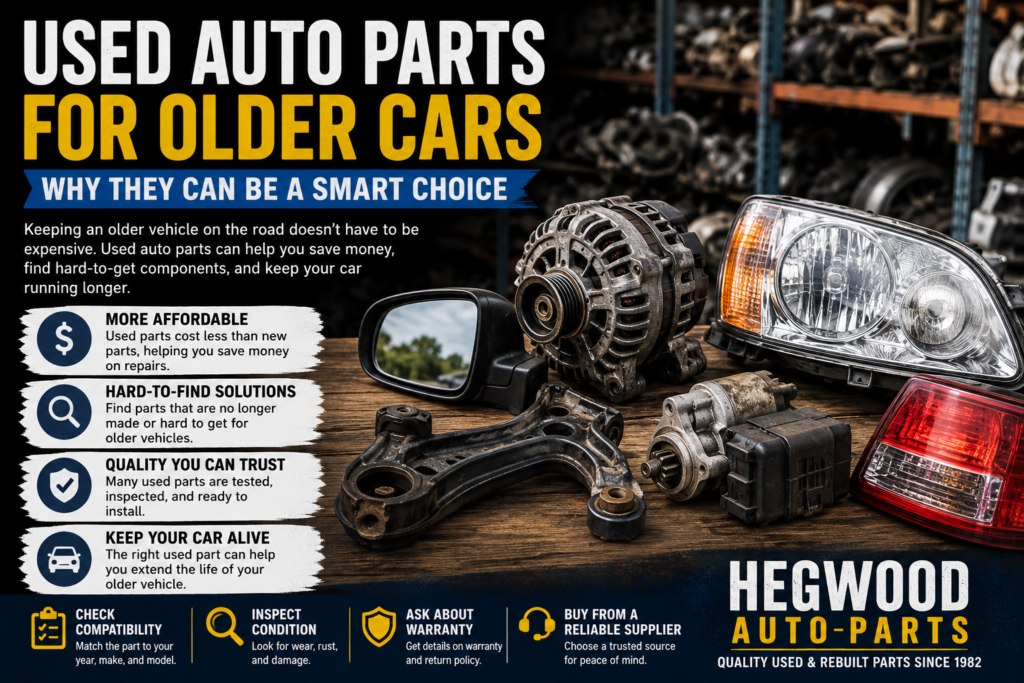
Finding replacement parts for an older vehicle can sometimes be challenging, especially when certain components are no longer widely available as new parts. Used auto parts for older cars can provide a practical alternative when you need a replacement without spending more than necessary.
Used components can be particularly useful for vehicles that are no longer in production or models where original replacement parts are becoming harder to find.
In this guide, we’ll explain why used auto parts can be a smart option for older vehicles and what you should check before purchasing.
1. Used Parts Can Be More Affordable
Used auto parts can often cost less than comparable new replacement components. For owners of older vehicles, this can make repairs more manageable while still providing access to the parts needed to keep the vehicle running.
The actual savings depend on the type of component, its condition, availability, and supplier. Always compare the overall value rather than choosing a part based solely on the lowest price.
2. Older Vehicles Can Have Hard-to-Find Parts
As vehicles age, some replacement components can become harder to locate through traditional new-parts suppliers. Used auto parts can provide access to components recovered from vehicles of the same or similar model.
This can be especially useful for discontinued models or vehicles with limited new-part availability. A used supplier may have body panels, interior components, lights, trim pieces, mechanical parts, and other components that are difficult to source elsewhere.
Before purchasing, provide the vehicle’s year, make, model, engine information, and part number when available. This can help the supplier identify the correct component.
3. Used Parts Can Help Preserve Older Vehicles
Keeping an older vehicle on the road often requires finding replacement components that match its original design. Used parts can make this easier by providing access to components removed from other vehicles.
Body panels, lights, mirrors, interior pieces, wheels, engines, transmissions, and other components may be available depending on the vehicle and current inventory.
When possible, compare the replacement part with your original component before purchasing. Check the part number, mounting points, connectors, dimensions, and other identifying details to help confirm compatibility.
4. Check Compatibility Carefully
Compatibility is especially important when buying parts for an older vehicle. Different production years, engine options, trim levels, and model variations can use different components.
Before purchasing, provide the vehicle’s year, make, model, engine, VIN, and original part number when available. Ask the supplier to confirm that the replacement is suitable for your specific vehicle.
Taking a few minutes to confirm compatibility can help prevent ordering the wrong part and avoid unnecessary returns.
5. Consider the Condition of the Part
When buying used auto parts for older cars, condition should always be considered. A component that has been exposed to years of use may have more wear than a part from a newer vehicle.
Ask about the part’s condition, mileage when available, previous use, inspection, and any known damage. For mechanical components, also ask whether the part has been tested before being sold.
6. Check for Rust and Corrosion
Older vehicles and their components can sometimes have increased exposure to rust and corrosion. Carefully inspect used parts for excessive corrosion, particularly around mounting points, connections, brackets, and other areas that may affect fitment or performance.
Surface rust does not automatically mean a component is unusable, but significant corrosion can affect certain parts. Ask the supplier about any visible rust or corrosion before purchasing.
7. Consider Used Body and Interior Parts
Used body and interior components can be particularly useful when restoring or maintaining an older vehicle. Doors, fenders, hoods, bumpers, seats, dashboards, trim pieces, mirrors, and other components may be available from vehicles of the same model.
When choosing these parts, check the color, trim level, mounting points, condition, and compatibility. Finding a matching original component can sometimes make an older vehicle repair easier.
8. Compare Used and New Replacement Costs
Before purchasing a replacement, compare the price of the used component with the cost of a new part. For some older vehicles, a new replacement may be expensive or difficult to find.
A quality used component may offer better overall value when it is compatible, in good condition, and available at a reasonable price. Consider warranty coverage, return terms, shipping, and installation costs when comparing your options.
9. Ask About Warranty Coverage
Warranty coverage can provide additional confidence when purchasing used auto parts for older cars. Warranty terms vary depending on the supplier and type of component.
Ask how long the warranty lasts, what is covered, and whether any conditions apply. Understanding the warranty before purchasing can help you compare different replacement options.
10. Choose a Reliable Used Auto Parts Supplier
The supplier you choose is an important part of the buying process. Look for a business that provides accurate information about its parts and can answer questions about compatibility, condition, warranty, and returns.
A reliable supplier can help you identify the correct component for an older vehicle and provide information that allows you to make a more informed decision.
11. Check the Part Number
For older vehicles, checking the original part number can be especially helpful. Parts that look similar may have different specifications or applications depending on the model year and configuration.
Compare the number on your original component with the replacement whenever possible. If you’re unsure, provide the part number and vehicle information to the supplier and ask them to confirm compatibility.
12. Consider Original Equipment Components
Used parts can sometimes provide access to original equipment components that were removed from another vehicle. This can be useful when maintaining an older vehicle where finding an exact replacement is difficult.
Original equipment fitment can be particularly helpful for body panels, interior pieces, lights, mirrors, trim, and other components where matching the original design is important.
13. Ask About Mileage and Previous Use
For major mechanical components such as engines, transmissions, and differentials, ask whether the mileage is known. Previous use can provide additional information when comparing different replacement options.
Mileage should not be the only factor you consider. Also ask about inspection, testing, condition, maintenance history when available, and warranty coverage.
14. Consider the Overall Value
The cheapest used component is not always the best choice. Consider the part’s condition, compatibility, availability, warranty, return policy, and expected service life when comparing options.
A quality replacement from a reliable supplier may provide better overall value than a cheaper part with unknown condition or limited support.
Frequently Asked Questions About Used Auto Parts for Older Cars
Are used auto parts good for older cars?
Used auto parts can be a practical option for older vehicles, particularly when new replacement components are expensive or difficult to find. Always confirm the condition and compatibility before purchasing.
Why are used parts useful for older vehicles?
Used parts can provide access to components from the same model or generation, including parts that may be discontinued or difficult to find new.
How do I find the right part for an older vehicle?
Provide the vehicle’s year, make, model, engine, VIN, and original part number when available. These details can help identify the correct replacement.
Should I check the mileage of a used engine or transmission?
Yes. Mileage can provide useful information about previous use, although it should be considered alongside condition, inspection, testing, and warranty coverage.
Do used parts for older cars come with a warranty?
Warranty coverage depends on the supplier and the specific component. Always ask about the warranty before purchasing.
Final Thoughts
Finding replacement parts for an older vehicle does not always mean buying new components. Used auto parts for older cars can provide an affordable and practical option, particularly when original replacement parts are expensive or difficult to locate.
Before purchasing, confirm compatibility, inspect the condition, check the part number, ask about mileage and previous use, and review the warranty and return policy.
If you’re looking for used or rebuilt parts for an older vehicle, Hegwood Auto Parts can help you explore available replacement options and find a component that matches your vehicle’s needs.