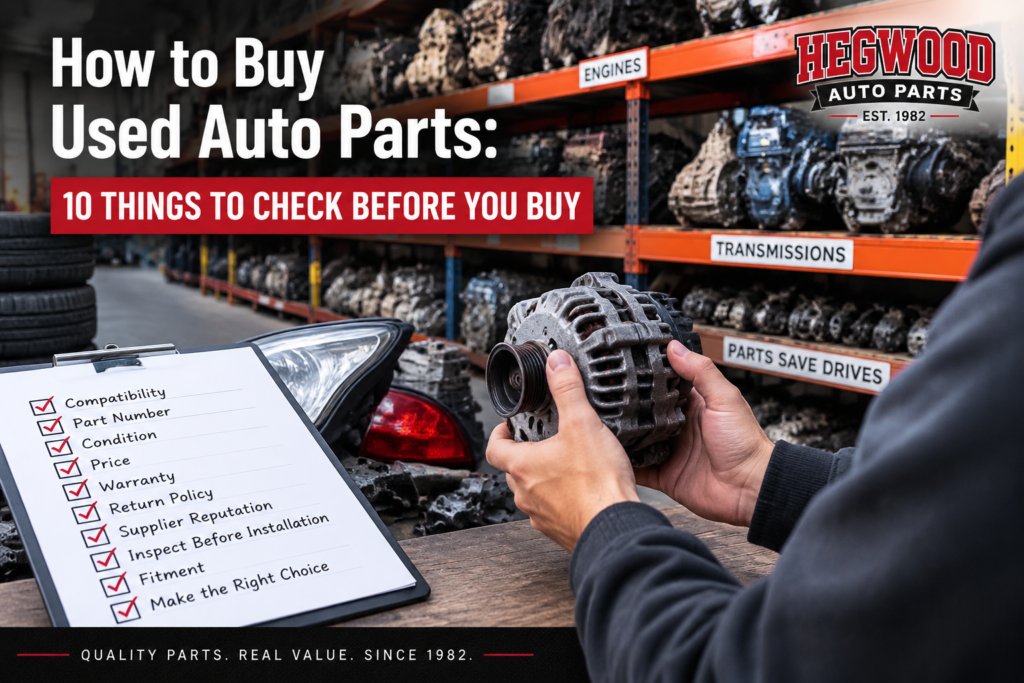
Learning how to buy used auto parts can help you repair your vehicle while keeping costs under control. However, finding the right part involves more than simply choosing the cheapest option. You need to make sure the part is compatible with your vehicle, understand its condition, and know what is covered by the seller’s warranty or return policy.
. You need to make sure the part is compatible with your vehicle, understand its condition, and know what is covered by the seller’s warranty or return policy.
Whether you’re replacing a mechanical component, body panel, electrical part, or another vehicle component, taking a few minutes to check the details before buying can help you avoid costly mistakes.
In this guide, we’ll cover 10 important things to check before buying used auto parts so you can make a more informed decision.
Confirm Your Vehicle Information
Before searching for a used auto part, make sure you have accurate information about your vehicle. At minimum, you should know the year, make, model, and engine. Depending on the part, additional information such as the transmission type, trim level, drivetrain, or VIN may also be important.
Having accurate vehicle information makes it easier to identify compatible parts and reduces the risk of ordering something that does not fit your vehicle.
2. Identify the Exact Part You Need
Different vehicles can use different versions of the same type of component. Before purchasing, identify the exact part you need and, when possible, compare the original part number with the replacement.
Photos, measurements, part numbers, and detailed vehicle information can all help when confirming that a used auto part is the correct match.
Check the Part Number
If the part has a manufacturer or original equipment part number, compare it with the number on your existing component whenever possible. A matching part number can provide useful information when determining whether a replacement is suitable for your vehicle.
If you cannot find a part number, provide the seller with your vehicle information and clear details about the component you need. Photos can also be helpful when identifying certain parts.
Ask About the Part’s Condition
A used auto part has previously been installed on another vehicle, so its condition is an important consideration. Ask whether the part has been inspected and whether there are any known signs of wear, damage, or other issues.
For mechanical and electrical components, ask what testing or inspection has been performed. Understanding the condition before purchasing can help you choose a part that is appropriate for your repair.
Compare the Price
Price is an important factor when buying used auto parts, but the cheapest option is not always the best value. Compare the condition of the part, its compatibility, warranty, return policy, availability, and any shipping or installation costs.
A slightly higher-priced part from a reliable supplier may provide better overall value if it comes with appropriate warranty coverage and better information about its condition.
Check the Warranty
Before buying a used auto part, ask about the warranty and understand exactly what it covers. Warranty terms can vary depending on the supplier and the type of part.
Check the warranty period, what types of failures are covered, and whether there are any conditions you need to meet. Keeping your receipt and purchase information can also be important if you need to make a warranty claim.
Understand the Return Policy
Before completing your purchase, review the seller’s return policy. Find out how long you have to return a part, whether the part must be unused or uninstalled, and whether there are any return shipping or restocking requirements.
Understanding the return terms before you buy can make the process much easier if the part turns out not to be compatible with your vehicle.
Verify Compatibility Before Buying
Never assume that a part will fit simply because it comes from the same vehicle manufacturer. Differences in model year, engine, transmission, trim, drivetrain, and production specifications can affect compatibility.
Provide as much vehicle information as possible and confirm fitment with the seller before completing your purchase. When available, a VIN or original part number can provide additional information for identifying the correct component.
Choose a Reliable Used Auto Parts Supplier
The supplier you purchase from matters just as much as the part itself. Look for a business that provides clear information about its parts, answers questions about compatibility, and explains its warranty and return policies.
A reliable supplier should be willing to help you identify the correct component rather than simply selling you a part without confirming whether it is suitable for your vehicle.
Inspect the Part Before Installation
When your used auto part arrives, inspect it before installing it on your vehicle. Check for visible damage and make sure the part matches the description and the vehicle information you provided.
If something appears incorrect, damaged, or incompatible, contact the supplier before installation. Installing a part before identifying a problem can make returns or warranty claims more complicated.
Where to Buy Used Auto Parts
Choosing the right supplier can make the process of buying used auto parts much easier. Look for a supplier that can provide accurate part information, help confirm compatibility, and explain the condition, warranty, and return terms for the component you’re considering.
Hegwood Auto Parts provides used and rebuilt auto parts for customers looking for replacement components. When contacting a parts supplier, have your vehicle’s year, make, model, engine information, VIN, and part number available when possible. Providing these details can help make the search for the right part faster and more accurate.
Frequently Asked Questions About Buying Used Auto Parts
Are used auto parts worth buying?
Used auto parts can be a practical option for many repairs when the part is compatible with the vehicle and is in suitable condition. Always check the condition, fitment, warranty, and return policy before purchasing.
How do I know if a used auto part will fit my vehicle?
Provide the vehicle’s year, make, model, engine, VIN, and original part number when available. A supplier can use this information to help determine compatibility.
Are used auto parts cheaper than new parts?
Used parts are often less expensive than comparable new replacements, although prices vary depending on the part, condition, availability, and supplier.
What should I ask before buying a used auto part?
Ask about the part’s condition, compatibility, part number, warranty, return policy, and any inspection or testing that has been performed.
Should I inspect a used auto part before installing it?
Yes. Inspect the part when it arrives and make sure it matches what you ordered. If you notice damage or a compatibility issue, contact the supplier before installation.
Final Thoughts
Buying used auto parts doesn’t have to be complicated. By checking your vehicle information, confirming the part number, asking about condition, comparing overall value, and understanding the warranty and return policy, you can make a more informed purchasing decision.
Take the time to verify compatibility before ordering and choose a supplier that provides clear information and support. A little research before purchasing can help you find the right replacement part while keeping your repair costs under control.
If you’re looking for used or rebuilt auto parts, contact Hegwood Auto Parts with your vehicle and part information so you can explore available replacement options.